

The 6th International Conference on Consumer Electronics and Computer Engineering (ICCECE 2026) Successfully Held at Wuhan Institute of Technology
From January 23 to 25, 2026, the 6th International Conference on Consumer Electronics and Computer Engineering (ICCECE 2026) was successfully held at Wuhan Institute of Technology (WIT). Hosted by WIT and jointly organized by its School of Computer Science and Engineering (School of Artificial Intelligence) and the Hubei Key Laboratory of Intelligent Robots, the conference attracted hundreds of experts, scholars, and industry professionals from universities, research institutions, and enterprises worldwide. Participants engaged in in-depth discussions on cutting-edge topics including consumer electronics, artificial intelligence, the Internet of Things, and cybersecurity.
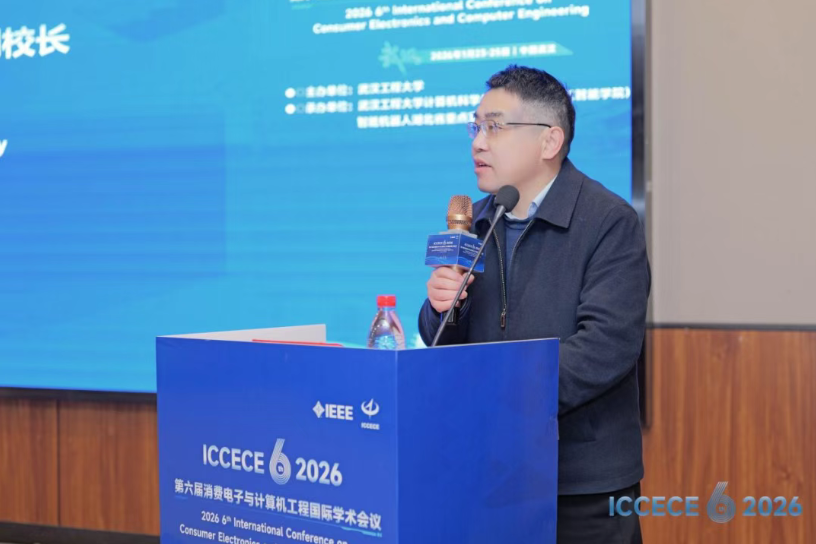

The conference officially opened on the morning of January 24. Professor Huaiying Yao, Vice President of Wuhan Institute of Technology, delivered the welcoming address on behalf of the host. He extended a warm welcome to all attendees and emphasized that hosting such a high-level international conference serves as an important platform for deepening global collaboration, fostering interdisciplinary integration, and supporting the development of the electronic information industry. He expressed hope that the conference would stimulate academic exchange and the translation of innovative technologies, injecting new momentum into research advancements and talent development in related fields. The opening ceremony was moderated by Professor Huaxin Xu, Dean of the School of Computer Science and Engineering (School of Artificial Intelligence) at WIT.
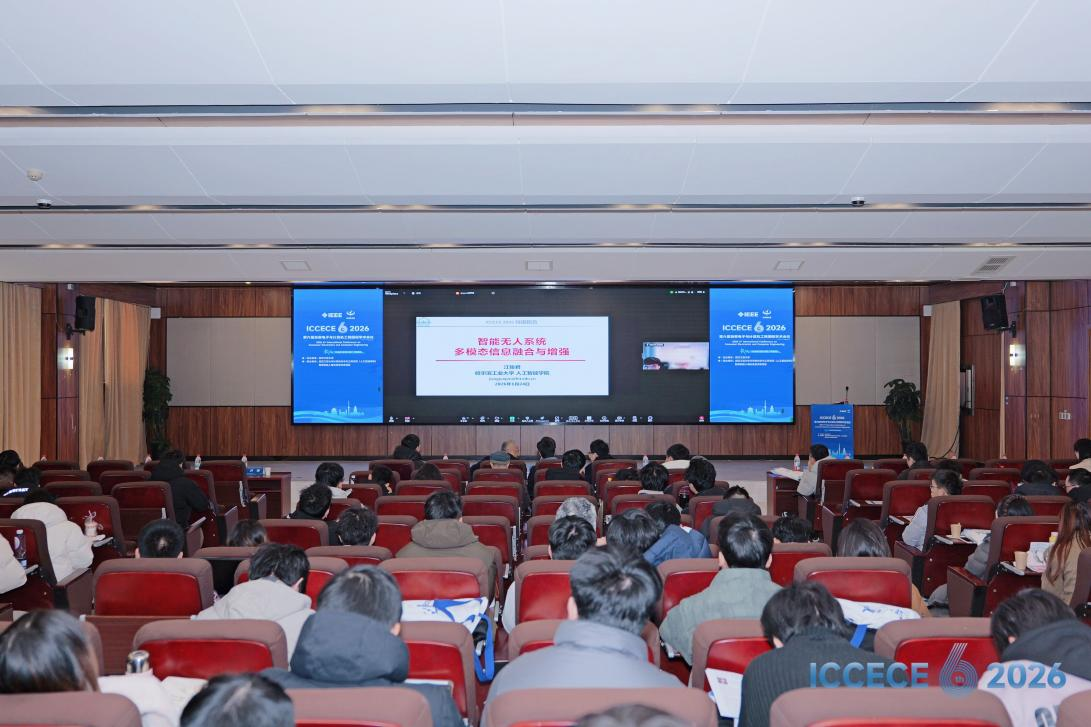
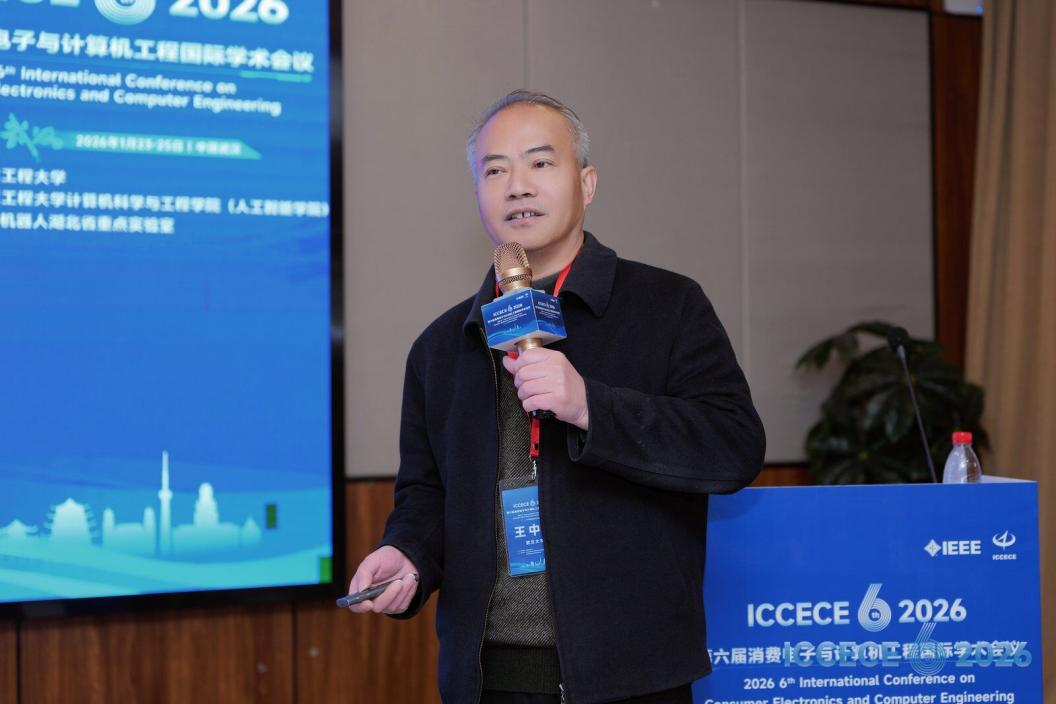
During the conference, four distinguished scholars delivered insightful keynote speeches. Professor Zhongyuan Wang from Wuhan University presented on "Trustworthy Face Recognition in Social Security," discussing identity authentication technologies under challenges such as mask occlusion and deepfakes. Professor Leyuan Liu from Central China Normal University presented "High-Fidelity Twin Digital Human Generation Technology and Its Application in Autism Intervention," showcasing innovative applications of digital humans in medical rehabilitation. Professor Jiayi Ma from Wuhan University delivered a talk on "Application-Oriented Multimodal Image Fusion," systematically elaborating on cutting-edge methods and the broad prospects of image fusion technology. Professor Junjun Jiang from Harbin Institute of Technology spoke on "Multimodal Information Fusion and Intelligent Perception," exploring challenges and solutions for intelligent perception systems in open environments.


In the oral presentation sessions, many early-career researchers presented their latest findings, covering hot topics such as emotional interaction in service drones, lightweight detection for retail product packaging, and low-light image enhancement. The poster session featured cutting-edge research from multiple universities and institutions, including Northwestern Polytechnical University, Wuhan University of Technology, and the Chinese Academy of Sciences. Posters addressed interdisciplinary fields such as system security, maritime target tracking, connected vehicle security, and rehabilitation assistance systems, sparking lively on-site discussions.
The three-day conference provided a high-level, open platform for academic dialogue and industry-university-research collaboration through keynotes, oral presentations, poster sessions, and online synchronous exchanges, bringing together scholars, engineers, and students from the global consumer electronics and computer engineering community.
